
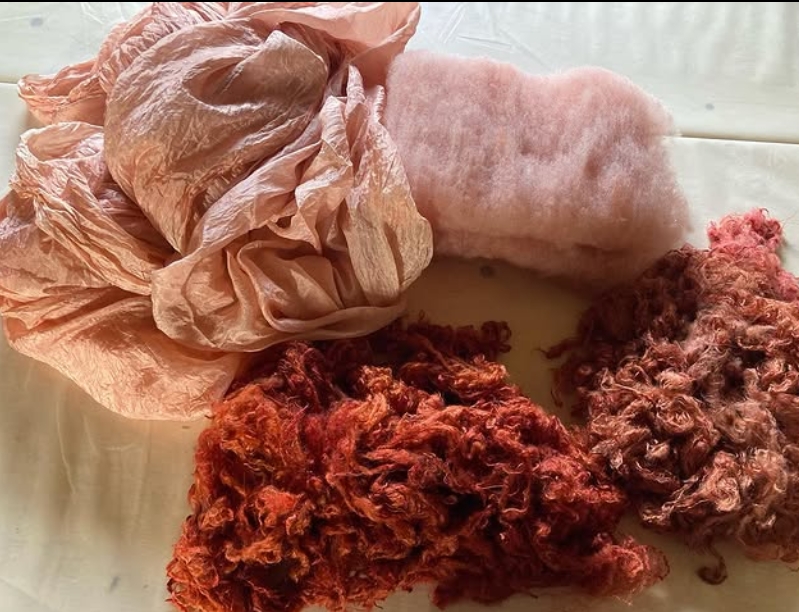
Mushrooms are, I’ve come to understand, more than fragile forest treasures, they are living messengers, speaking silently of the land’s health and history. Some species only flourish in very specific ecological habitats, signaling that a forest may belong to a unique bioregion worthy of protection. In their presence, we hear a quiet but powerful story: nature asking us respect and preservation.
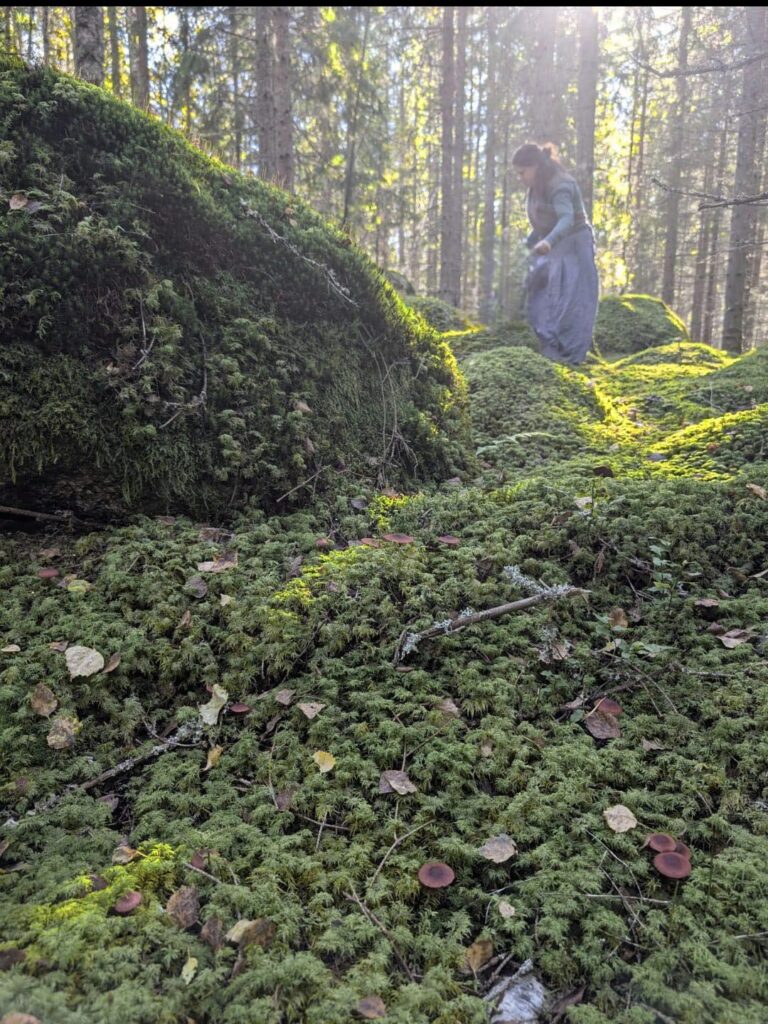
And the more I learned to identify them, the more I began to see them, some tiny and hidden close to the ground, others small but growing in very specific places.
One of the wonderful things about Sweden is that you’re free to pick mushrooms. I began by learning to recognize edible varieties, just one new species each year. Now, every autumn, we have several kinds on our table. A few years ago, I also started searching for mushrooms to use for dyeing. As I learned more, I became amazed by the abundance of species in the forests around us. And the more I learned to identify them, the more I began to see them, some tiny and hidden close to the ground, others living on composting trees, in wet areas or very dry, mossy or bare landscapes.
My favorites are Cortinarius sanguineus, the blood red webcap. It dyes wool almost exactly the color it displays, which is rare. Sometimes the most brilliantly colored mushrooms, like the amethyst webcap, tempt you to expect equally vibrant violet dyes, but sadly, they do not deliver. Each mushroom has its own story, and in discovering them, I’ve come to appreciate the intricate life of the forest.
In her book The Mushroom at the End of the World, anthropologist Anna Lowenhaupt Tsing shows how one rare mushroom, the matsutake, teaches us about more than its practical value. Through the lives of foragers, trees, and human communities, she reveals a story of multispecies survival and resilience. Mushrooms are not just part of a forest; they are key actors in the intricate web of life, reminding us that our ecosystems are interconnected and fragile.
In this way, creating and designing fashion with natural colors becomes a form of activist art, a way to protect what I love most: nature and the forests.
In my own practice, I honor this intelligence. When I pick mushrooms, I respect their substance, the way they spread, and the way they survive, ensuring I never harm a species. Beyond harvesting, I investigate and map the different species in their habitats, and connect with forest owners to share their ecological worth and significance. In this way, creating and designing fashion with natural colors becomes a form of activist art, a way to protect what I love most: nature and the forests in a land where forests often are seen as income, cutting down valuable trees, destroying all other amazing creatures in their way.
While I often feel a bit like a playful witch stirring my magical pots, my only intention is simple: to do no harm, and to celebrate the forests I hold dear.
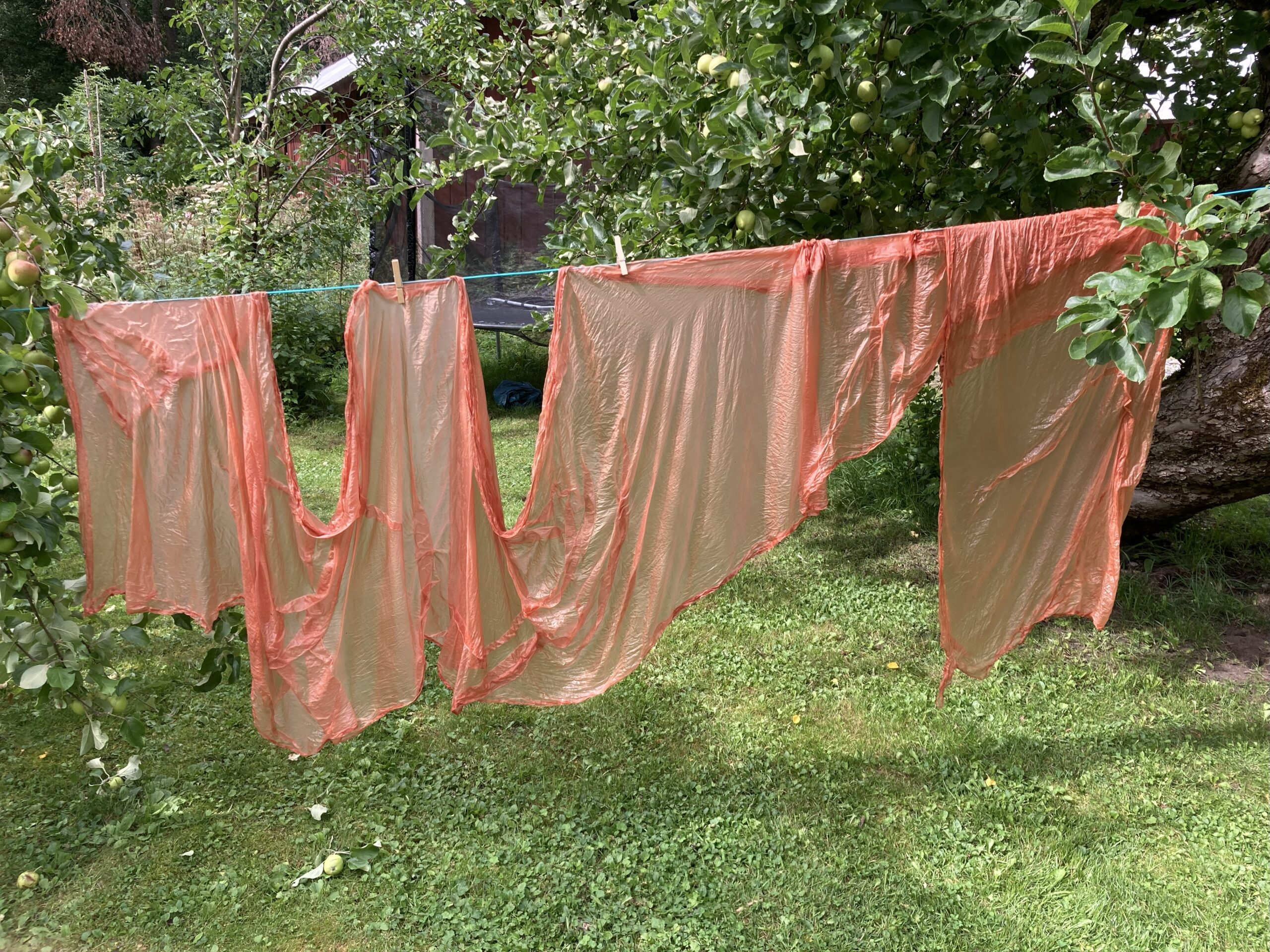
This is real slow fashion. My work takes years, from collecting wool and mushrooms, to washing, dyeing, and finally creating a finished product in which up 80% to 100 % of the materials originate from my own surroundings. I’ve even delved into scientific research to ensure that my dyes leave no harmful residues in the clothing (some of them being poisonous mushrooms). While I often feel a bit like a playful witch stirring my magical pots, my only intention is simple: to do no harm, and to celebrate the forests and craft fashion in ways I hold dear.
If you want to join my artivistic journey in mushroom dyeing, you are very welcome to join my magical mushroom dyeing retreat in late summertime.
Leave a Reply